It’s about a new attitude to gardening
For me this is first hoespipe ban in 12 years from Anglian Water and I have been quite moved by it. I see lots of opinions online and I completely understand the frustration, water companies leak a third of what they take from the ground, they pump raw sewage into rivers and the sea, they pay out dividends to shareholders, so why should ordinary households be the ones asked to cut back? But ignoring the ban is not the solution. Letting go of Hydrangeas probably is. Anyone watering their lawn needs a good shaking!
At the risk of sounding like I’m letting the water companies off the hook. I’m not. This is the beginning of the water crisis that we will be facing for future years. The issue is much bigger and people need to think way beyond their own ideas of the perfect garden. Because in reality the English Garden days are numbered.
The infrastructure case against water companies is real
England and Wales privatised water in 1989, splitting the old regional water authorities into ten private regional monopolies overseen by the regulator Ofwat. Today, more than 70% of the English water industry is estimated to be in foreign ownership, and the sector has been repeatedly criticised for prioritising shareholder returns over reinvestment in pipes and treatment works.
Some of the numbers people quote are broadly accurate. Non-revenue water, mostly leakage, has historically run at around a fifth of everything the industry supplies. Investigations going back to a 2009 BBC Panorama report found that more than 20,000 combined sewer overflow pipes routinely discharge untreated waste around Britain’s coastline and rivers, a system originally designed for rare emergency use, not routine operation. It’s genuinely hard to ask people to stand in the garden with a watering can when the same week brings news of sewage in a river you used to swim in.
To their credit, the water industry disputes the “nothing’s improved” narrative: it points to leakage being at its lowest recorded level, down more than a third since the 1990s, and to a five-year, roughly £104 billion investment programme that includes nine new reservoirs (plus a tenth, Havant Thicket, already under construction). Is it enough? I dont know and I wouldn’t be able to say.
But the drought isn’t only a plumbing story
Hosepipe bans keep coming back in the UK 2022, 2025, now again, because the underlying weather is changing faster than the pipes are being fixed, and because the land itself has stopped holding onto water the way it used to.
This is where the urban heat island effect comes in. Concrete and asphalt absorb roughly 2,000 times as much heat as an equivalent volume of air, and without vegetation to provide shade and evapotranspiration, that heat just sits and radiates, day and night. Researchers are blunt about the mechanism: reduced evaporation due to a lack of vegetation is one of the two dominant drivers of urban heat, and heat and drought feed each other in a loop: hotter cities dry out faster, and drier ground heats up even faster.
This is exactly the case the Woodland Trust has been making for years. Its 2020 Emergency Tree Plan called on national and local government to look after existing trees, fund new ones, and use planning powers to identify land for canopy cover. Its 2025 follow-up report, State of the UK’s Woods and Trees, found that urban canopy cover across the UK stands at just 19.3%, and that even overall UK woodland cover, at 13.5%, remains far below what’s needed, it’s calling for the current rate of woodland creation to be tripled. Shade and transpiration are some of the cheapest, lowest-tech tools available for cooling towns and slowing ground-level evaporation. It isn’t really about aesthetics; it’s about physics.
And this is where our own gardens come in, because the same logic applies at the scale of a back garden as it does at the scale of a city.
Lawns, soil, and the illusion of low maintenance
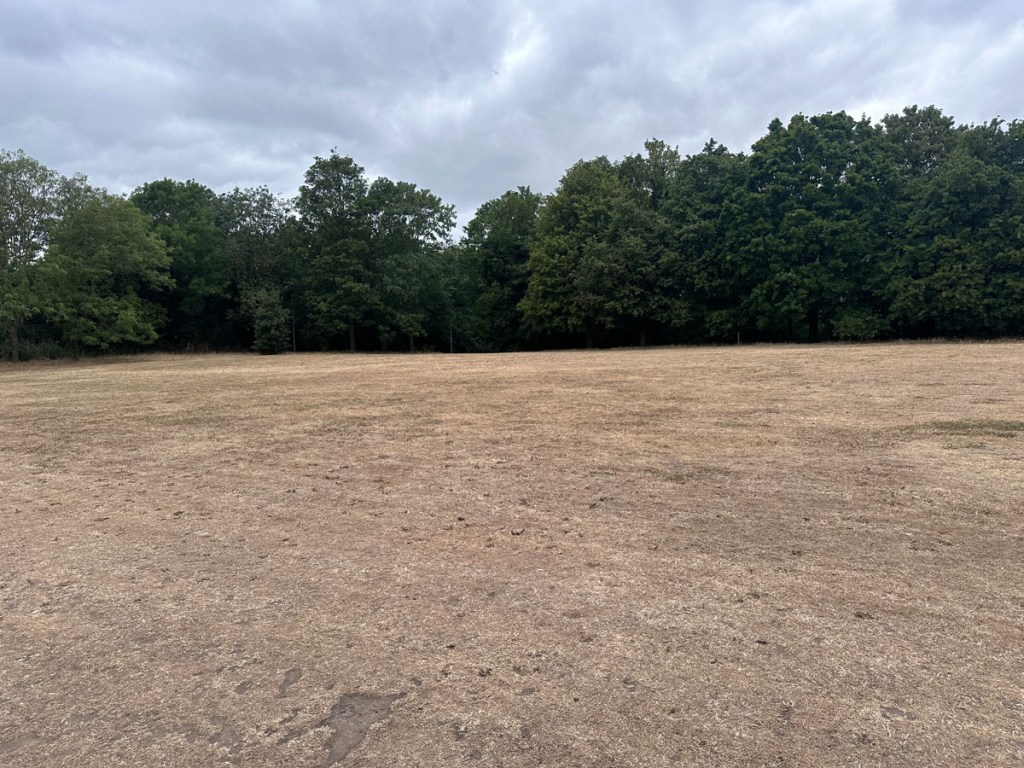
A close-mown lawn of shallow-rooted turf grass is one of the least drought-resilient things you can put in the ground. It has almost no capacity to shade the soil beneath it, its root systems rarely reach more than a few inches down, and it depends on frequent watering precisely when water is scarcest. It’s worth remembering that the turf lawn as a cultural default started in England as a status symbol, not a practical choice, and we’ve inherited that assumption without questioning it.
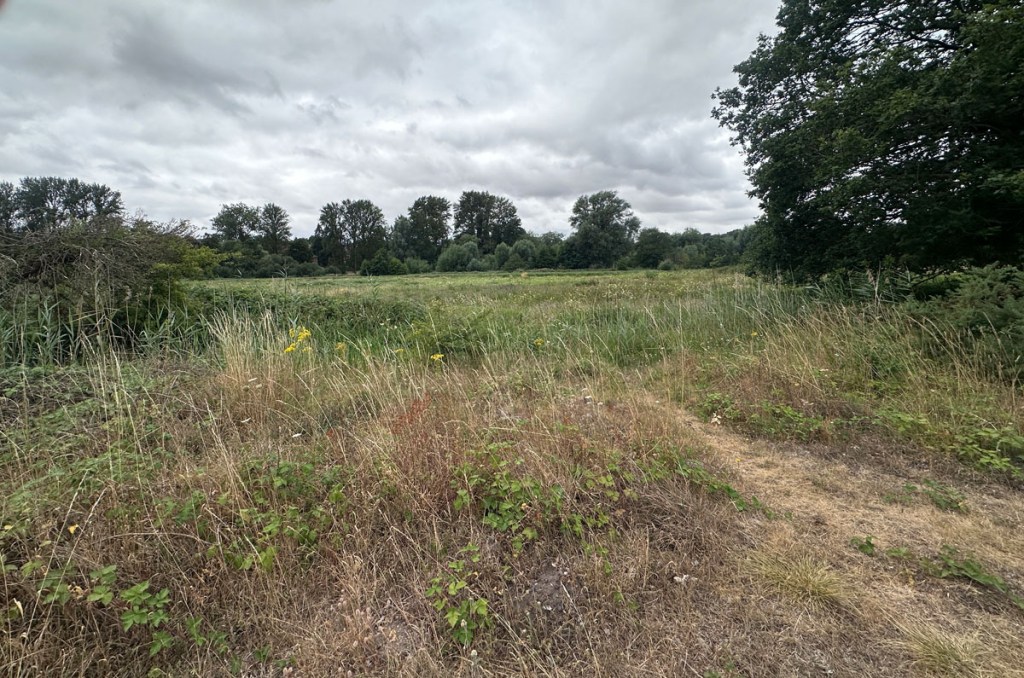
Contrast that with what soil scientists and horticulturists call a resilient planting scheme: deep-rooted perennials and shrubs, a diversity of species rather than a monoculture, and critically healthy soil structure with organic matter that can actually absorb and hold water rather than shedding it as runoff. Deep roots do two jobs at once: they reach moisture reserves that shallow grass can’t, and they open channels in the soil that let rain penetrate instead of running straight off a compacted lawn into the drain. Trees and shrubs add a third benefit lawns can’t: shade that keeps the ground beneath them measurably cooler, reducing evaporation from the soil itself.
None of that is compatible with the version of a “good garden” that’s become popular over the last decade: the clipped, weed-free, Instagram-ready lawn, or worse, artificial turf, which does nothing but reflect heat and shed every drop of rain straight into the nearest drain. A garden run that way isn’t low-maintenance so much as high-input, high-water, high-chemical, high-heat, dressed up as tidy.
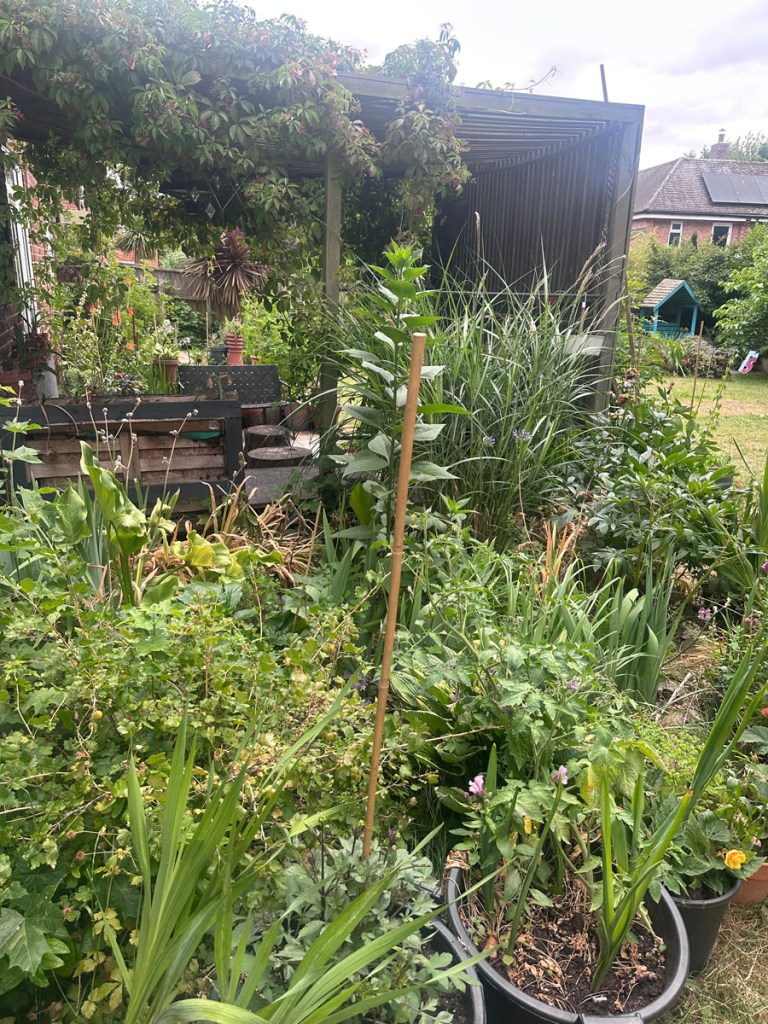
If every household treats the hosepipe ban purely as something done to us by a failing utility, we miss the part of this we can actually control street by street: what we plant, how deep its roots go, whether our soil can hold a downpour instead of shedding it, and whether we’re providing any shade at all. A country of gardens designed around deep roots, mixed planting, and real soil health would need less water during a drought and would cool the surrounding air in the process. A country of clipped monoculture lawns and plastic grass will keep needing hosepipe bans regardless of how many leaks get fixed.
It’s not a reason to let water companies off the hook. It’s a reason not to wait for them either.
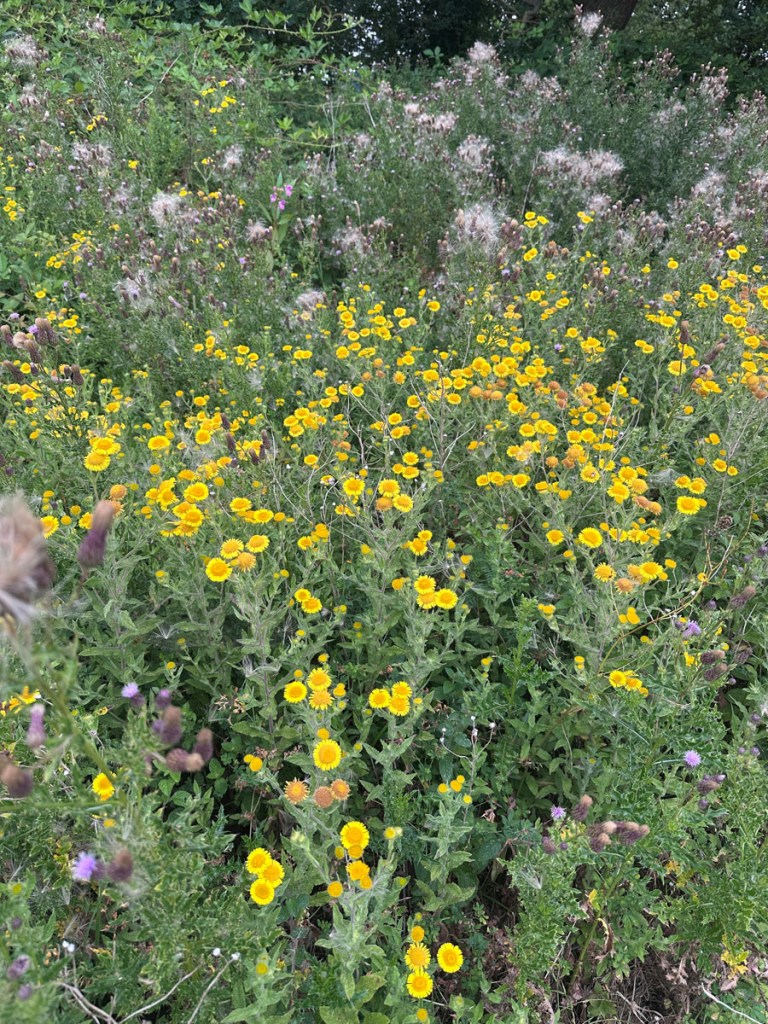
It might not be pretty but looking at nature in these extreme times begins to give us a clue as to how we can move forward. I dont know enough but it’s a good start to cue my explorations!

