I’m not much of a public person, and I rarely venture out of my garden, let alone to speak to other gardeners. The other day, I met some enthusiasts volunteering in a garden, and I found myself apologising for talking so much about gardening. The thing is, they loved it and wanted to know more. I don’t consider myself an expert, but I can’t stop talking about the industry as I know it.
How much can I actually know about the industry?
I don’t farm the bulbs,
I no longer buy the bulbs,
and
I no longer sell the bulbs.
But I have been doing this for a long time and have met some very interesting people along the way. I’m just a little frightened when I meet enthusiasts, because they lap up knowledge. They tend to ask serious, clever questions. They know a lot about many things, and I know my garden and the things I grow in it. They are looking to save themselves from gardening disasters. I work for a bulb company, so all my bulbs are free, and I always have next year to right any wrongs.
I am regularly asked the same questions for which I still haven’t deduced a stock answer. Here is my list of questions I am regularly asked but can’t answer.
How do you stop squirrels?
You can’t. They have evolved to dig up nuts for winter, so you can’t beat nature. I have noticed they are very active in September and October and maybe less so in November. I have no proof of this, but I tend to plant later and rarely have a problem with them. Crocus tend to deplete much quicker than I would wish, but not something I lose sleep over.
People often ask about deer, too. I’m sorry, but I don’t have experience with deer. Where do you think I live?
What do you recommend for snails?
Nothing. Just hope for a hard winter and a dry summer.
Why are your bulbs not organic?
Oh my! It’s so hard being a farmer as it is.
I’m all for organic products. It seems like a good idea. Better for the soil, so harvests grow better; better for the environment; and better for the consumer. But it doesn’t mean the bulbs will be of better quality.
Bulbs have to be grown in commercial fields. Most gardens have hot spots where plants really flourish without fertiliser and pesticides and go on for years. But you can’t do that with a commercial crop. They have to grow where you have a field.
Without modern farming practices, the yield will be much smaller, and that will affect the price.
For our company, the main issue is one you might not consider. Warehousing! They would need to be held in an exclusively organic warehouse to avoid contamination from other bulbs. It is impractical for a company to hold two different stocks at two sites; they would have to be either organic or not. Given the range of current organic bulbs, the yield, and the probative costs, this is not going to be the model for a large bulb supplier like us.
It is a shame, but it also sparks my interest. Gardening in the future will be different.
Imagine if the industry collapsed. (Yikes!) For example, during the war, fields were dedicated to growing food. It was recognised that the flower industry was important, but farmers had to hold back smaller stocks and keep just enough to keep the varieties alive. Food production will always take precedence over flowers, and we have to be conscious that we need to feed a lot more people than we used to. We will have to depend on small growers and organic producers.
Land is a valuable commodity, and flowers are not an essential crop. They are a huge part of the Dutch economy. But look what happened to the tulip fields of Lincolnshire and the daffodil growers of the UK. Land is too valuable, demand is too high, and the workforce is not there. They cost too much to pay and house. It’s not sustainable. Should we not encourage smaller growers to use what they can and work with many more perennial plants, native plants that don’t require such a drain on the environment? It’s a horrible thought, but it seems to be pointing in this direction. But it doesn’t have to be a bad thing. There will always be enthusiasts and people willing to grow. Look what happened to allotments in lockdown. We’ll make it work.
I hate daffodils.
Not really a question, but I was a little flabbergasted when this was said to me and I didn’t know what to say. I still don’t. It hurt me, but it helped me learn that some people are horrible inside. (Just joking)
Will tulips come back?
No. Not really. The magic of bulbs as a crop is that they don’t need to be raised from seed. In fact, that’s a very labourious thing to do. Instead, they create their own planting stock by division. This is the same reason they don’t really flower again in your garden. Many of these offshoots will be too small to produce a flower. You may get one or two larger bulbs that could be planted again.
Dutch farmers look for size 9 bulbs to replant to fatten them up for spring harvests. These bulbs can go on to produce size 12 bulbs given the right circumstances. It is very hard for a gardener to achieve these results.
If you are looking to grow tulips for more than one year, it is important to lift them and remove the smaller bulbs so they don’t get in the way of the bigger bulbs.
Are bulbs good for the environment?
Not really. But gardening cleverly and choosing the right bulbs is.
Buying tulips every year puts a heavy demand on the land and does nothing to support the soil. They’re not even particularly interesting to insects. Daffodils, crocuses, and snowdrops, however, are, and they’re perennial. Planted in your garden, they serve to feed pollinators. They will lose any residual pesticides and fertilisers and don’t require much attention thereafter. Buy wisely and buy for the future.
Why are bulbs grown in Holland and not the UK?
Ah, a long answer that goes back to 1900, when bulb farming started to take off in Wisbech, Bourne and South Lincolnshire. The bulb industry bloomed in the UK, with its heyday in the 1960s and 70s.
Just to intersect here. I think it’s funny how unscrupulous suppliers were in those days. You have it two ways. Firstly, the customer just wanted some stuff to stick in the ground. There wasn’t the internet, Gardeners’ World and so forth. Experts were a world apart. So most gardeners would buy what they knew. Red tulips – Apeldoorn, Red Riding Hood, Murillo sports mixed. And the supplier would be blase, and say, well, we haven’t got that, but this red one will be ok. It’s red, what more do you want? Also, the reason why Spanish bluebells are so prevalent in the UK. They were bluebells, and to hell with the classification.
Many Dutch families made a lot of money from Lincolnshire and supplied a lot of work to the local towns. My own family business has had generations of students who worked through the summer holidays and remember those days fondly. It was hard work but satisfying.
The main difference is that Holland had much sandier soil, easier to manage. The silty soil of the reclaimed land in Lincolnshire is much heavier and harder to drain. It’s rich and more nutrient-filled, but potentially risky! Secondly, the waterways of Holland were more abundant. If the fields needed water, they could tap into the canals. The ditches and dykes of Lincolnshire couldn’t compete.
It boiled down to bulb production per square foot. Eventually, the cost swallowed up the industry, and it is all but gone these days. Lincolnshire still grows the finest daffodils you’ll find, but there are no new growers to take on the old businesses, and it’s been monopolised by Taylors Bulbs. But as a small supplier, I couldn’t work with them, they were too stretched too thinly.
There are still hundreds of growers in the UK, producing a wide range of plants and bulbs. There are hydroponics, boutique growers and networks of flower farmers. The flower industry is far from over in the UK, and long may it thrive. It’s just not done on the same scale, but maybe that’s a good thing.
I lifted this article straight from the KAVB’s (Royal General Bulb Growers’ Association) website and translated it. I think it is very interesting to understand the difficulties of the bulb industry and how they are working to overcome some of the bigger environmental concerns.
KPIs Based on the Area Discussions
Area Pilot: Flower Bulbs
Colophon
Project: The circular KPIs project is an initiative of the Ministry of Agriculture, Nature and Food Quality, within which the KAVB carried out activities to support the flower bulb area pilot project. Editorial staff: Rianne van der Hulst (KAVB) in collaboration with Dorieke Goodijk (KoningBoer) Contact:vanderhulst@kavb.nl Edition: November 2021 Publisher: KAVB Title: Sustainability: First Draft of KPIs for the Flower Bulb Sector
Table of Contents
Reason
The Flower Bulb Sector 2.1 Description of the sector 2.2 The flower bulb sector: characteristic and unique 2.3 The challenges now and in the future 2.4 Research
Key Performance Indicators of the Flower Bulb Sector 3.1 The starting point for formulating the KPIs 3.1.1 The solution direction 3.1.2 The cycle goals 3.1.3 Set of KPIs for the flower bulb sector
Findings of the Flower Bulb Area Pilot 4.1 Improving the socio-economic position of the flower bulb sector 4.2 Improving circularity 4.3 Anticipating climate change 4.4 Improving soil quality and management 4.5 Improving water quality and management 4.6 Strengthening functional agrobiodiversity 4.7 Promoting plant health
Necessary changes for policy
General recommendation
Recommendation for further project Bibliography
1. Reason
The social challenges that agriculture and horticulture currently face are complex and numerous. Entrepreneurs must consider biodiversity decline, combating and dealing with climate change, reuse of raw materials, landscape quality, and air, soil and water quality, as well as animal and plant health. As a determining factor in rural areas, agriculture plays a key role in achieving these goals. This involves not only individual agricultural entrepreneurs (growers, forcers, gardeners, livestock farmers, breeders), but also farmers’ organizations, chain parties, consumers, governments, nature and environmental organizations and other social groups, because effects play out at different spatial levels and an individual entrepreneur has limited options to influence them alone.
Governments and other parties have set goals for these societal challenges. On climate, biodiversity, air and water quality, goals have been agreed internationally and national and provincial governments have taken on obligations (e.g., Paris Climate Agreement, Birds and Habitats Directives, Water Framework Directive). The policy vision “Agriculture, Nature and Food: valuable and connected. The Netherlands as a leader in circular agriculture” (LNV 2018) advocates agriculture that minimizes waste, reduces harmful emissions, and uses raw materials and end products with minimal losses. The Delta Plan for Biodiversity Restoration has focused on ‘bending the curve’ of biodiversity loss (WWF, 2020). The Horticulture Agreement sets joint government–horticulture commitments based on the LNV vision and focuses on circular and sustainable horticulture.
To work effectively toward these goals, it is important to offer agricultural entrepreneurs more scope for action by: a) focusing on concrete goals linked to target dates, b) taking an integral approach, and c) making performance clear, transparent and measurable so contributions from agricultural entrepreneurs can be (financially) appreciated.
The starting point of this project is that development can be facilitated by a Key Performance Indicators (KPI) system for sustainable circular agriculture (the KPI-K system). From the flower bulb sector, the KAVB took up the challenge to indicate which circular KPIs are suitable for this specific sector.
An online trajectory started in June 2021, facilitated by FarmHack for the Ministry of Agriculture, Nature and Food Quality, inviting the flower bulb sector and stakeholders to exchange knowledge. Inputs from those online conversations were discussed in KAVB product group meetings, where board members could provide input. Boards from KAVB circles were informed. There were also discussions with knowledge institutions, research agencies and industry organizations. A digital meeting on November 1, 2021, arrived at a supported initial design for flower bulb circular KPIs and evaluation. The findings are described in this paper.
2. The Flower Bulb Sector
2.1 Description of the sector
The Netherlands is the world’s most important producer and exporter of flower bulbs and bulb flowers. More than 60% of all flower bulbs in the world come from the Netherlands. Alongside other agricultural sectors, flower bulb cultivation is an important pillar of the Dutch economy. This position is due to entrepreneurial companies, an appealing assortment, good growing conditions, and in-depth knowledge of breeding, cultivation and trade. The sector is characterized by high-quality products, supported by the BKD (an independent administrative body fulfilling statutory duties for the Ministry of Agriculture, Nature and Food Quality) which guarantees independent quality assessment.
Cultivation is interwoven with Dutch culture, with the tulip as a national icon. To maintain a leading position, the flower bulb sector aims to remain at the forefront of quality and sustainability. This is only possible if entrepreneurs realize profitable operations that create room to invest in the company, the sector and a healthy living environment.
The sector comprises more than 1,500 companies that together grow approximately 27,000 hectares of flower bulbs (CBS, 2020). Tulips are grown on more than half the area. Lily, hyacinth, gladiolus and daffodil are other large bulb crops. Three types of cultivation can be distinguished:
Growers,
Grower/forcers, and
Forcers.
Growers usually cultivate more than one bulb crop and sell the bulbs. Grower/forcers force the majority of their own bulbs. Forcers buy bulbs to force, often year-round. The sector therefore produces planting stock, bulbs for sale, and potted and cut flowers. Cultivation is concentrated on dune sand soils along the coast (Northern sandy area, the Bulb Region, Kennemerland). Additional concentrations are found on clay soils in West Friesland and the Noordoostpolder. Elsewhere in the Netherlands, bulb cultivation is often on a contract basis.
2.2 The flower bulb sector: characteristic and unique
Underground process. Bulb development occurs largely in the soil. Growers have limited insight into this growth process, making management difficult; soil influences increase vulnerability.
Small, diverse and capital-intensive. The sector has a leading position but is small globally. It involves heavy investment in machinery and installations for cultivation and storage, making it capital intensive. There is great diversity of crops, species and varieties; the sector is specialized and knowledge-intensive.
Cyclical cultivation. Bulb growers cultivate their own plants alongside the bulbs they sell. New plants come from existing batches. Without intervention, cyclical cultivation can trap growers in a vicious circle; with space and care, it can lead to increasingly high-quality planting material.
Slow process. Breeding takes a long time between crossing and market introduction. Tulip bulbs take years to flower and propagate slowly; producing enough bulbs of a new variety can take 20–25 years.
2.3 The challenges now and in the future
Ever-increasing demands. International customers impose stricter requirements, especially virus standards. Retailers increasingly demand guarantees on sustainability and varietal purity.
Fewer resources, less fertilizer, soil fertility under pressure. Approved chemical products are disappearing faster than new (green) products arrive. Alternative methods and techniques are often insufficiently available. Fertilizer use is increasingly constrained. Suitable land is scarce; disease pressure is increasing; rotations are tight; soil fertility is under pressure.
Shortage of personnel. The sector relies on manual work and specific knowledge. Finding qualified personnel is increasingly difficult; this may limit the sector. Mechanization and automation require significant investments; the market for such machinery is limited; the sector will need to help organize technological development. It must remain attractive to new employees and retain them.
Administrative burden and bureaucracy. Regulatory pressure consumes time and causes frustration; certification adds to the burden. Reduction—preferably prevention—of this pressure and bureaucracy is essential. Regulations should be trust-based, aiming to achieve goals together.
2.4 Research
The sector cannot survive without research. For over 140 years, it collectively gathered funds to solve problems through research. Until 2012, each entrepreneur contributed via a trade levy, enabling practical and fundamental research to solve issues.
Research is still needed for a future-proof sector (e.g., new diseases and pests as conventional means disappear, new cultivation systems such as alternative weed control). Crop-oriented research is financed by KAVB funds to which growers voluntarily contribute. For future-oriented projects this is insufficient to fully support transition to new systems. From 2022, a Binding Declaration allows substantial annual collection from all growers to fund development and application of new knowledge, enabling more fundamental research alongside practical work.
3. Key Performance Indicators of the Flower Bulb Sector
3.1 The starting point for formulating the KPIs
The sector faces major societal and environmental challenges: circularity; climate; soil, water and air quality; biodiversity; and plant health. Top sectors have set out goals in their Knowledge and Innovation Agenda with key technologies. The flower bulb sector’s 2018 vision Vital Cultivation 2030 explains how it will work toward vital cultivation by 2030. Together with the Horticulture Agreement—focusing on careful use of raw materials, reducing harmful emissions, and energy-efficient cultivation—this forms the starting point for a KPI set to stimulate circular agriculture.
3.1.1 The solution direction
By translating governmental circular and sectoral tasks to the company level, it becomes possible to see what is needed to achieve (circular) goals. It is essential that entrepreneurs, organizations and government work together toward goals rather than unilaterally imposing measures. Agricultural entrepreneurs have a wealth of knowledge and experience to apply on their own farms. Collaboration and rewarding good results lead to “a healthy sector with a thriving future.”
3.1.2 The cycle goals
In the white paper Integrated management of goals for sustainable agriculture via KPIs (Van Doorn et al., 2021), integrated cycle goals are formulated. In the flower bulb area pilot, these were translated into sub-goals:
Table 1. Flower bulb cycle goals
Circular goals
Sub-goals
Improving socio-economic position
Sufficient income for the sector
Improving circularity
Optimal land use / stimulating residual flows
Anticipating climate change
Transition to green (non-fossil) energy
Improving soil quality and management
Improving soil quality
Improving water quality and management
Improving water quality
Restoring/enhancing biodiversity
Strengthening functional agrobiodiversity
Improving plant health
Improving plant health
3.1.3 Set of KPIs for the flower bulb sector
In the area pilot, cycle objectives were made concrete. The first set of indicators to operationalize sustainable circular performance should meet these conditions:
Joint, clear, demonstrable relationship with circular agriculture;
Integrated set (indicators should not work against each other);
Baseline measurable at every company;
Influencable by taking measures;
Minimal administrative burden by using existing registration and monitoring systems;
Limited in size yet offering a broad spectrum of management options.
Proposed indicators (16):
Working conditions
Varied crop rotation plan
Waste-flow action plan and accountability (residual flows and reuse)
Reduction of fossil energy use (electrical energy balance)
Greenhouse gas emissions (CO₂-eq/ha)
Nitrogen uptake/emissions
Organic matter balance (+/- % OM)
Soil quality
MIG (Environmental Impact Indicator for Crop Protection)
Water collection (e.g., rainwater)
Improving regional water management
Water quality measurements
Landscape elements
Stimulation of fauna
Use of more resistant crops
Promote plant health (IPM measures)
Formulating this set is challenging because entrepreneurs often face constraints beyond the farm that can affect scores. Some measures are still in development. It is important to discuss with companies why choices were made before judging. Bottlenecks observed in area discussions are included in this report. Chapter 4 describes possible measures toward circularity goals and their environmental contributions.
4. Findings from the Flower Bulb Area Pilot
4.1 Improving the socio-economic position
Measures. The sector is labor-intensive; labor costs are a large share of total costs. Tight labor markets put pressure on HR. Seasonal work causes good employees seeking full-time work to leave. Employers can make conditions more attractive via permanent contracts, training, and offering housing.
Environmental contribution. A better socio-economic position enables investment in measures to improve environmental impact and the sector’s image, strengthening local acceptance and employer appeal.
Bottlenecks. The KWIN (Quantitative Information on Flower Bulbs) dates from 2005–2006 and is outdated, yet widely used by entrepreneurs, policymakers and advisors. A current edition would help develop more appropriate policy and improve the sector’s socio-economic position. The sector also needs better (tax) legislation for seasonal employment and clearer, more consistent housing policies for migrant workers; many plans fail due to local opposition, leading to shortages in housing capacity.
Possible indicator. Employment conditions (e.g., average hourly wage, employee availability, length of employment, contract type, housing, training and courses—for entrepreneurs and employees).
4.2 Improving circularity
Measures. The sector already exhibits circularity: bulbs are planted; after topping and senescence, bulbs are harvested; small bulbs (planting material) are separated and replanted. The sector also limits waste flows and uses side and residual flows. Choices depend on revenue models, region and business type. Green manures add nutrients and support soil life; organic fertilizers can be used. Partnerships with livestock farmers (e.g., “travelling bulb stall”—land exchange to improve rotations, maintain organic matter and reduce disease pressure) are possible. Regional residual flows (e.g., verge grass, nature reserve clippings) can be composted or made into bokashi.
Environmental contribution. Green manures reduce nutrient leaching and erosion, fix nitrogen, improve soil life and structure, and extend habitat availability for fauna. Mixed green manures can improve (soil) biodiversity and disease resistance.
Bottlenecks. On light soils, green manures can increase nematodes, potentially requiring more crop protection to meet strict phytosanitary standards. Some measures (e.g., composting on-farm) are hindered by regulations (e.g., azole-containing agents in compost heaps). Regional partnerships aren’t always feasible.
Possible indicators. Varied crop rotation plan; Waste-flow action plan and accountability (residual flows and reuse).
4.3 Anticipating climate change
Measures. Energy savings via LED lighting, new greenhouse concepts and materials; replacing natural gas with geothermal energy; (sustainable) electricity and heat from biomass, industry and greenhouse environments; drying bulbs with greenhouse air; DC fans; new greenhouse builds with better energy performance; on-site generation (solar, wind), heat pumps; exploring hydrogen (H₂); securing external CO₂ sources.
Environmental contribution. Reduced fossil fuel use lowers greenhouse gas emissions.
Bottlenecks. Grid capacity limits feed-in from solar/wind; infrastructure and regulatory certainty are lacking; energy storage is costly. Large solar parks reduce cultivated area; SDE subsidies favor large projects. Insurance reluctance regarding rooftop solar; municipal opposition to wind turbines; hydrogen lacks infrastructure, machinery, and economic feasibility. Not all energy-saving investments are viable on existing sites.
Possible indicators. Reduction of fossil energy use (electrical energy balance); Greenhouse gas emissions (CO₂-eq/ha), including crop CO₂ uptake; Nitrogen absorption/emission (define forms and reduction pathways).
4.4 Improving soil quality and management
Measures. Soil is a key production factor. Focus areas: fertilizers, organic matter, technological developments.
Fertilizers: Use efficiently to prevent accumulation/leaching; regular soil analyses; use of organic materials (compost, manure); comply with Fertilizer Act and related regulations.
Organic matter: Increase OM with green manures, non-inverting tillage, straw incorporation; choose species by purpose, timing, soil type and rotation.
Technology: Explore lighter machinery and lower tire pressure to limit compaction.
Environmental contribution.
Fertilizers: Lower losses and avoiding soil disinfection improve soil fertility.
Organic matter: A positive OM balance improves workability, moisture/air availability, structure and soil life; can reduce crop protection needs.
Technology: Less compaction benefits soil life and biodiversity.
Bottlenecks. Generic nutrient limits insufficient for coastal calcareous sands; land scarcity tightens rotations; uncertainty of N/P release from solid manure; current manure policy doesn’t account for soil type differences; administrative constraints on N space with rental/lease; short-term leases via tenders discourage long-term soil investments; lighter machinery may increase labor/time; low tire pressure is impractical for road transport without on-the-go systems.
Measures. The sector works to reduce emissions of crop protection products and water use: “Clean yard, clean ditch” projects since 2016 show significant emission reductions; rainwater collection and storage; drainage for water table optimization; drip irrigation; filtration in greenhouses with cleaner discharge; learning from greenhouse horticulture; research into cultivation “without” soil (e.g., bulb coaster project with biodegradable trunks containing growing medium, water and nutrients). Crop protection: Comply with Environmental Management Activities rules; licensed use with drift-reducing techniques, closed filling systems, precision spraying; awareness and training; new MIG indicator (PPP started 2019) to quantify environmental impact. Technology: Drift reduction; alternative disinfection (ECA water); foaming/coating applications; mechanical weed control (e.g., hoeing).
Environmental contribution. Reduced chemical use and better practices lessen impacts on surface water; improved collection, purification and reuse; technology reduces drift/runoff.
Bottlenecks. Shrinking availability of approved products; slow approvals (Ctgb capacity) especially for low-hazard/green products; LDS (Low Dosage System) not labeled for all products; alternative methods (ECA water, mechanical weeding) not yet universally applicable or economical; wet years hinder mechanical methods; risk of plant damage.
Possible indicators. MIG (crop protection environmental impact); Water collection (e.g., rainwater); Improving regional water management; Water quality measurements.
4.6 Strengthening functional agrobiodiversity
Measures. Encourage biodiversity that directly/indirectly supports crops: green manures with positive biodiversity effects; later mowing of ditch edges; herb/flower borders; landscape elements (trees, shrubs, hedges); nesting boxes and shelters for birds, insects, hedgehogs and bats. Measures must be functional, not reduce production land, and fit the region. Collaboration with nature associations helps.
Environmental contribution. Flowering margins support insects; nesting boxes support bird conservation (e.g., counts via local associations).
Bottlenecks. Not all measures suit every company (travelling bulb stall); margins may harbor pests (e.g., thrips) leading to more crop protection; vegetation can cause shade reducing yields. Nest boxes have no meaningful downsides.
Possible indicators. Landscape elements (e.g., herb mixtures); Stimulation of fauna (presence of birds, butterflies, mammals, amphibians, insects).
4.7 Promoting plant health
Measures. Research into a one-way system (Fundamental System Leap): start with clean material grown rapidly under protected, optimal conditions before outdoor cultivation—to avoid disease carry-over (not yet ready for practice). Healthy soil life and adequate organic matter (compost, coarse manure) are essential. Grow more resistant crops. Apply IPM: cultural, physical, biological and chemical methods that are cost-effective, environmentally friendly, and socially acceptable—often reducing costs while maintaining high yield and quality.
Environmental contribution. Greater crop resilience reduces need for crop protection. New breeding techniques (e.g., CRISPR-Cas) could reduce inputs if regulations allow.
Bottlenecks. Regulation of new breeding techniques prolongs time to market; tulips need at least 15 years for marketable bulbs. Short-term improvements hinge on soil fertility; long-term on breeding and plant improvement.
Possible indicators. Use of more resistant crops; Promote plant health (IPM measures).
5. Necessary Changes for Policy
Work together toward goals instead of imposing ever more (often contradictory) measures and bans.
Long-term regulatory vision (≥10 years); prevent conflicts between national, regional, and EU rules.
Design and reliably implement multi-year agreements (e.g., energy), as in 2015.
Sector-specific regulations (for the flower bulb sector).
Regional policy applicable to each business type.
Level playing field within the EU for flower bulb companies.
Protect Dutch flower bulb cultivation against threats from abroad (new diseases/pests).
Abolish or expand the small-crop definition system (e.g., include lilies and tulips; broader ornamental horticulture or entire bulb sector).
Shift manure policy focus to enable good soil management.
Reward desired behavior and compensate ecosystem services.
Provide exemptions and good (sectoral/ regional) subsidy schemes where needed.
Avoid unnecessary regulation of new DNA (breeding) techniques (e.g., CRISPR-Cas).
6. General Recommendation
Measuring sustainable circular performance in the flower bulb sector (open cultivation) is challenging due to company diversity. Some firms combine cultivation with forcing, trade, or arable farming; others grow multiple crops year-round. Regional differences and crop differences (e.g., tulips vs. lilies; spring vs. summer bulbs) are substantial.
Some indicators are strongly influenced by developments outside the company (e.g., government agreements), limiting individual influence. It is sensible to address bottlenecks sectorally (via consultations and sector plans) as well as regionally and at company level. Policy should motivate bulb growers to pursue circularity goals without replacing the entrepreneur’s role—give entrepreneurs room.
Include key variables in Circular KPIs: farm type, crop, region, sales area, etc., and account for savings already achieved.
7. Recommendation for Further Project
Given sector diversity, formulating KPIs relevant to all entrepreneurs is challenging. With field input, a suitable set can be formulated and bottlenecks anticipated. A pilot with at least 15 entrepreneurs should test KPIs in practice.
Criteria for participating companies:
SMEs;
Representation from various regions/soil types (sand, clay, mixed);
Diverse company types: 1) Growers, 2) Grower/forcers, 3) Forcers; plus companies with arable, livestock, trade, summer crops or perennials.
During testing, define thresholds and target values, ensuring integrity and coherence between KPIs. Based on this, design a fair reward system to encourage pioneers.
Target values: ecological optima for sector functioning—the “dot on the horizon.”
Threshold values: levels at which the current situation does not deteriorate further and begins to have a positive effect on cycle goals.
The starting point for thresholds and targets are the cycle goals: societal objectives for circularity, climate, soil, water, air quality, biodiversity and plant health.
Remuneration scheme. Besides financial rewards, there is a strong need for regional regulatory flexibility (exemptions) as part of rewards. Income differences per plot can be hundreds of thousands of euros; growers need influence to combine good cultivation with circular goals—exemptions help.
Before the national pilot:
Ensure policymakers and participating growers have read this document.
Link knowledge, research and integrated advice to the KPI approach.
Work with partners to achieve the best results. KAVB wishes to be kept informed of progress.
Bibliography
A. van Doorn; J. Reijs; J.W. Erisman; F. Verhoeven; D. Verstand; W. de Jong; K. Andeweg; N. van Eekeren; A. Hoes; C. Koopmans; J.P. Wagenaar; P. de Wolf (2021). Integrated management of sustainable agriculture goals through KPIs.
CBS (2020). Which flower bulbs do we grow most often? – The Netherlands in figures 2020 | CBS.
Chris J. Koopmans, Jan Willem Erisman, Marleen Zanen, Boki Luske, Louis Bolk Institute (2017). Biodiverse arable farming: exploration of indicators for agrobiodiversity in arable farming.
CAP Pilot (2021). CAP Pilot Sectoral Building Blocks – CAP pilot Common Agricultural Policy (glbuitdepraktijk.nl).
J.W. (Jan Willem) Erisman; C.J. (Chris) Koopmans; M. (Marleen) Zanen; N. (Nick) van Eekeren; J.P. (Jan-Paul) Wagenaar, Landscape/4 (2020). Performance indicators for agricultural soils.
J. Zijlstra; P.W. Blokland; N. Van Eekeren; G. Migchels; N. Polman; M. Bestman, Louis Bolk Institute (Oct 2017). Monitoring functional agrobiodiversity in dairy farming: development of KPIs.
KIA (Dec 2011). Knowledge and Innovation Agenda 2018–2021: Societal challenges and key technologies.
KAVB, WUR, Greenport Dune and Bulb Region, Greenport North Holland North (2021). Vital Cultivation 2030: Vision of the flower bulb sector.
KAVB, WUR, Greenport Dune and Bulb Region, Greenport North Holland North (2021). www.vitaleteelt.nl
K. Termeer (2019). Achieving a transition to circular agriculture. Wageningen University & Research note for the Dutch House of Representatives Committee on LNV.
MPS (2021). Home – MPS (my-mps.com).
PlanetProof (2021). Plantaardig – On the way to PlanetProof.
Petra Berkhout; Wim de Haas; Martin Scholte, WUR. Advice on the design of monitoring and evaluation circular agriculture. Note for the Ministry of LNV.
Hey, I didn’t write this. It’s ChatGPT list we made after a long discussion about sustainability and research of the bulb industry. I can’t claim that I’ve read all of it either but I’m working my way through. Some of it is interesting.
Pick out an article that looks interesting to you and let me know your thoughts.
Residues in Ornamental Plants Marketed as Bee Friendly: Levels in Flowers, Leaves, Roots and Soil” This is a study of 54 perennial ornamental plants marketed as “bee friendly,” analyzing whole bulbs, roots, soil, stems, petals for up to 536 pesticide compounds. It shows that all tested plants contained at least one pesticide, sometimes up to 19 different substances. SSRN
Use: strong empirical support for your point that “residual is a loose term” and for caution about what “organic” or “pesticide-free” claims might mean in ornamentals.
“Pesticide exposure in dwellings near bulb growing fields — an explorative study” (Hogenkamp et al., Netherlands, 2004) This study measured pesticide residues in household dust in homes of bulb growers, and in homes close to bulb fields. They found detectable levels of compounds like chloropropham, flutolanil, and vinchlozolin in non-farming homes too, and higher levels in bulb growers’ homes. aaem.pl+1
Use: to show the pathways by which bulb production pesticides may spread beyond fields, strengthening your environmental- and health-oriented angle.
“A review on pesticides in flower production” (Pereira et al., 2021) A broader survey of pesticide use in floriculture, discussing effects on human and environmental health, and pointing out how ornamental plant production is less regulated or less scrutinised than food crops. ScienceDirect
Use: to ground your argument in a broader literature, and to reference industry-level challenges of reducing pesticide use.
“PESTICIDE RESIDUES IN ORNAMENTAL PLANTS” SSRN (Porseryd et al.) The same work noted above but useful as a downloadable reference. SSRN
“From bulb development to postharvest treatments: advances in Hippeastrum spp.” (Shao et al., 2025) While not focused on pesticide residues, this paper discusses postharvest treatments and cultivation techniques in bulbous plants — which may include chemical treatments or sanitation steps. maxapress.com
Use: for background on how bulb industry handles bulb health, treatments, and postharvest care — helpful for your discussion of bulb industry practices.
“A solution for clean water in the flower bulb sector” — VAM WaterTech (industry report/blog) Describes a water-treatment and reuse system for bulb growers that removes fungi, viruses, and pesticide residuesfrom wash water, to reduce chemical load and improve sustainability. VAM WaterTech
Use: as a concrete example of a technological mitigation: you can present this as evidence that the industry does try to clean up, but also as evidence of the cost/complexity involved.
Benefits of Perennial Plants / Cropping Systems
“An agroecological vision of perennial agriculture” (Reynolds et al., 2021) Discusses how perennial crops can improve erosion control, soil health, pest management, biodiversity, and ecosystem services. Taylor & Francis Online
Use: a conceptual/theoretical underpinning for your argument; use key phrases or results to support claims about perennials’ ecological advantage.
“Potential of Perennial Crop on Environmental Sustainability of Agriculture” (Zhang et al., 2011) Outlines environmental advantages of perennial vs annual systems: deeper roots, constant soil cover, reduced nutrient leaching, etc. ScienceDirect+1
Use: to support claims about soil, water, and nutrient benefits of perennial planting.
“Does the Use of Perennials in Flower Beds Necessarily Improve Sustainability?” (Poje et al., 2023) This article addresses economic and ecological aspects of using perennials in landscaping: fewer replacements, less maintenance, positive soil effects. PMC
Use: good to reference when you argue that perennials can be more economical and lower maintenance in the long run.
“Perennial crops provide sustainable environmental benefits compared to annual crops” (News-Medical summary of research) A summary noting that perennials reduce soil & water erosion, nitrate leaching, and increase carbon sequestration relative to annuals. News-Medical
Use: an accessible summary you can cite (while also tracking down the original research if possible).
“Climate Benefits of Increasing Plant Diversity in Perennial Systems” (Yang et al., 2019) This paper shows that plant diversity in perennial systems helps soil carbon storage, reduces N₂O emissions, suppresses weeds, etc. ScienceDirect
Use: good support for secondary benefits of perennials beyond just “they don’t die.”
“Perennial Crops Boost Biodiversity Both On and Off Farms” (Civil Eats, 2023) Discusses how perennial cropping systems create continuous habitat for insects, birds, microbes — unlike annual systems that keep clearing and disturbing the soil. Civil Eats
Use: for the more narrative or “ecological story” side of your article — showing how perennials anchor life.
KPIs in Horticulture / Agriculture / Grower Metrics
“Top 10 KPIs Every Greenhouse Grower Should Track” (Velosio, 2025) Lists metrics such as yield per m², crop uniformity, labour efficiency, resource use (water, fertiliser), input cost per output, etc. Velosio
Use: as inspiration for what bulb growers might already measure — helpful to connect your gardener’s pressure to the internal metrics of the industry.
“Key Performance Indicators (KPIs) – making use of production data” (AHDB, UK agriculture/horticulture) An agricultural/horticultural guide to choosing meaningful KPIs — with examples of financial KPIs (cost per unit, pounds per unit output) and production metrics. AHDB
Use: to ground your claims about industry-level pressures and what growers have to track.
“Production Costs and Profitability for Selected Greenhouse Annual and Perennial Crops” (Wei, Khachatryan & Rihn, 2020) A study comparing economic performance of various greenhouse-grown crops, both annual and perennial, using metrics like net income, gross margin, profit margin, sensitivity analysis. It shows that although perennials may have higher initial costs or more uncertainty, they can still produce positive returns under certain conditions. ASHS
Use: to lend financial realism to your argument — i.e. that perennials are not an economic fantasy, but a trade-off some growers already consider.
“Use benchmarking to improve your production metrics” (GreenhouseMag, 2010) Discusses using benchmarks and KPIs in greenhouse operations to understand how small efficiency improvements can compound in profit. Greenhouse Management
Use: as a reference point for how growers might respond to demands from gardeners (i.e. they are always optimizing small margins).
“Decades matter: Agricultural diversification increases financial profitability, biodiversity, and ecosystem services over time” (Raveloaritiana et al., 2024, preprint) This meta-analysis shows that over 20+ years, diversified systems (including more perennial or mixed planting) greatly increase soil quality, biodiversity, profitability, carbon sequestration. arXiv
Use: as a long-term systems argument: shifting to more perennial/mixed systems does not just trade off yield — it multiplies benefits over decades.
Residues on bulbs & exposure around bulb fields
RIVM “OBO flower bulbs” exposure study (Netherlands) – official Dutch investigation of resident exposure routes (air/soil/dust) near flower-bulb fields. Good for explaining how non-dietary routes work and why “residues dissipate over time” is context-dependent. RIVM+1
WUR/LEI – flower-bulb production & crop protection – background on integrated pest management history in the bulb sector and the shift away from heavy pesticide dependence; useful for historic context. eDepot
Efficiency & emissions of pesticides in Dutch bulb cultivation (WUR) – explains emission pathways from bulb fields to surface water (drainage, drift), handy for a factual sidebar on “where residues go.” eDepot
Progress report of the national environmental forum for bulbs – notes long-term trends in water quality in bulb regions and remaining exceedances; supports a balanced “improving but not solved” framing. eDepot
PAN Netherlands report on pesticides & water quality – NGO synthesis showing where exceedances are most common (bulb areas among hotspots). Useful for showing external pressure/critique. pan-netherlands.org
VAM WaterTech case – concrete example of bulb-sector wash-water purification aimed at removing pesticide residues, fungi & viruses; good for “industry mitigation in practice.” VAM WaterTech+1
Real-world Dutch bulb-industry KPIs (and who sets/uses them)
KAVB (Royal General Bulb Growers’ Association) – “Duurzaamheid: 1e voorzet KPI’s bloembollensector” (Nov 2021) – this is the KPI paper drafted with the Ministry of LNV and sector groups. It outlines circularity/soil/water/biodiversity/plant-health KPI sets and the rationale. Quote from the table of KPI domains, and the “area pilot” findings section. kavb.nl+1
BKD (Flower Bulb Inspection Service) – Annual Report 2024 – ZBO that inspects bulb quality/phyto health; annuals include sector figures (companies/areas/registrations), trends, and compliance signals you can treat as operational KPIs. bkd.eu+1
Royal FloraHolland – Annual Report 2024 – while not growers per se, it’s the major cooperative marketplace; use turnover, transaction volumes and energy/cost metrics to illustrate downstream economic KPIs driving the sector. Royal FloraHolland+1
CBS (Statistics Netherlands) – bulb area 2014–2024 – hard numbers on total bulb hectares and recent decline/increase; perfect for anchoring scale before you argue for demand-side change. Centraal Bureau voor de Statistiek
WUR & sector media on KPI adoption – notes on KAVB’s November 1 (2021) KPI meeting and sector engagement (use as corroboration of KPI process). eDepot
Dutch authorities & regulatory context (who’s who to cite)
BKD (Bloembollenkeuringsdienst) – statutory body for bulb inspection; EU audit docs explicitly list BKD’s role in plant passport/official controls—great for explaining the compliance backbone. European Commission
NVWA (Netherlands Food and Consumer Product Safety Authority) – advisory reports on risks in the ornamental/flower-bulb chain; cite to show oversight on plant health and (indirectly) chemical use. english.nvwa.nl+1
Ministry of LNV (Agriculture, Nature & Food Quality) – annual/ budget docs referencing BKD as an arm’s-length authority; use for formal definitions and governance lines. Rijksoverheid+2Rijksoverheid+2
Royal Anthos (trade association for bulb & nursery stock traders) – trade voice and stats gateway; useful for quotes on market dynamics/logistics. anthos.org
On the way to PlanetProof (SMK) – the sustainability certification most relevant to bulbs in NL; use criteria/updates to evidence KPI-like targets on biodiversity, water, crop protection and propagation material. planetproof.eu+2downloads.smk.nl+2
Benefits of perennials (for your “why perennials” sections)
Perennials in landscaping—evidence review – peer-reviewed analysis showing lower long-term maintenance, positive soil effects; also warns selection matters (good nuance for your dry wit). PMC
Perennial agriculture (review/vision) – ecological mechanisms: erosion control, soil health, biodiversity, carbon; use for your “ecosystem, not catalogue” line. Taylor & Francis Online
Why we should focus on the regeneration of the plants we already have.
When we plant tulips, we hope they will return next year, but most don’t. The elusive “perennial tulip” is a difficult promise, and we very cautiously recommend a few that are more likely to return than others. I mention tulips because I am regularly asked about perennial varieties. Why should it matter and why are they so important?
The fault of the tulip is also the reason it is such a successful crop. After a tulip finished flowering it divides into smaller bulbs. These smaller bulbs are not big enough to flower again next year. But by dividing into smaller bulblets, it creates its own planting stock. It has not been a crafty ploy by the industry to make customers buy new stock each year. However, increasing demands for tulips become an environmental issue.
Gardens are a small part of a much larger horticultural system. The flower industry involves growing, shipping, and selling flowers on a vast scale to supply not only your garden but also the cut flower trade and larger landscaping projects. In that extensive economy, price often outweighs principles. Gardeners like to see themselves as environmentally friendly, but only a small number are truly cultivating in an eco-conscious manner. The average gardener should consider their sources for plants and their actual needs.
The Industry Reality
Bulb growers are already under pressure. Land is limited. Labour is costly and increasingly difficult to find. Regulations surrounding chemical use are tightening; pesticides and fertilisers must be justified and recorded. Many growers are experimenting with natural soil enrichment and biological pest control, but these methods come with their own challenges. Progress is being made but the size of the bulb industry means it will never be quick or easy. And while your bulbs might contain faint traces of the fertilisers or treatments used during production, none of them would reach your garden if they were actually harmful. Most residues diminish over months, even more quickly in healthy soil. This means that over time, as bulbs naturalise and settle in, you’re effectively growing something cleaner each season. That’s the quiet magic of perennials: they improve as they stay put.
Why Perennials Matter
This is why perennial bulbs should be a greater focus. They divide, self-seed, and return with minimal help. Once established, they require almost nothing from you, except perhaps dividing to create more space and occasional mulching. Perennials aren’t just easy; they’re economical, ecological, and deeply satisfying. They reduce delivery miles, lessen demand on growers, and save you the trouble (and cost) of purchasing new plants each year. This aspect of gardening has been widely forgotten, as garden centres offer a broad and competitive selection of plants. The lively gardening community on social media is boosting demand for unusual or elaborate gardens. Consumers often buy plants for immediate results or luxury, without fully understanding their garden’s needs or the plants’ requirements. A very common complaint among non-gardeners is that they kill many plants. Likely, it’s because they are sold the wrong plants from the start. Choosing plants based on your knowledge and understanding of soil, light, and water retention should be your first step in creating a garden. It may exclude new gardeners, but it’s a vital lesson to learn! Planting perennials is an act of patience. You’re investing initially in something that will reward you in the long run. It’s the opposite of instant gardening, and that’s exactly the point.
Care Without Fuss
“Perennial” doesn’t mean “hands-off.” Even the most stoic bulbs have their limits. Clumps get crowded and need dividing; tired soil benefits from mulch or compost. Deadheading helps conserve energy for next year’s flowers. But these are gentle acts — maintenance, not consumption. The difference is philosophical as much as practical: you’re tending something that already exists, not buying something new to replace what’s gone. In return, your plants adapt to your garden. They find their rhythm, set their roots, and start to behave like locals. The longer they stay, the better they fit. You’ll often find that moving plants around the garden can improve their chances. There are so many subtle microclimates within one garden but it can make a lot of difference.
The Social Side of Sustainability
One of the most charming quirks of gardeners is their generosity. We can’t resist giving things away; a spare seedling, a handful of cuttings, a bag of divided bulbs. The more perennial your garden becomes, the more it invites sharing. Join a garden club or a plant swap, and you’ll see how lively the ecosystem of generosity is. Sustainability doesn’t have to be serious; it can look like a happy afternoon exchanging bulbs over cups of tea. Every plant passed from one garden to another is one less shipped halfway across Europe in a refrigerated lorry. That’s not a small accomplishment.The Beauty of EnoughIn the end, sustainable gardening isn’t about guilt. It’s about balance. Use what you have. Grow what lasts. Share what multiplies. You’ll still be tempted, of course. There will always be some new, beautiful thing calling your name from a catalogue. Go ahead, indulge, within reason. Just remember that a truly sustainable garden doesn’t demand constant novelty. It rewards care, continuity, and restraint. So plant your perennials, divide them, pass them on. Let them settle in. The longer they stay, the less they need.
And back to tulips
You can replant last year’s bulbs. Divide them into groups. Some might be okay, while others could take a year to grow larger. Very small bulbs are at high risk of drying out or rotting. Plant them, but don’t expect to see results unless conditions are perfect. It will require a big commitment, and I personally don’t have the time for it, but that doesn’t mean you shouldn’t try. It’s the best way to improve your gardening skills.
Read more
I mention a lot about the industry, however, I am not a grower and my personal experience of this is very limited. See my next blog which are references relating to the concerns of the industry, the chemical impacts of fertilisers and pesticides.
I have difficulty identifying with social media gardeners. I can’t bear Gardener’s World, and I don’t enjoy reading gardening books. I’ve always felt more like the Young Ones’ Vivian crashing through Felicity Kendal’s Good Life. Bloody Felicity Kendal.
I would never judge anyone who enjoys these things because I can see that the pursuit of knowledge, the desire to improve, and the desire to make things pretty are admirable ambitions. I would never take away from anyone’s wish to garden. Because, regardless of what you think of your garden, growing something is so much more important. Going beyond the world of know-how and home improvement, gardening is a connection to the world we all need. And the world needs it too.
My message is – You know what you grow, the more you grow, the more you know.
But as for me, the idea of gardening is overwhelming. There’s so much I don’t know. I don’t have time for seeds. I don’t have space to bring things on. I’m not inclined to find the right food for the right plants, be it bonemeal or tomato feed.
Take my lawn. It has a lot of weeds and dead patches. The reason I have a lawn is that I have a family. A dog that tears it up and shits on it. A boy who creates jumps for his bike. If I were to be precious over my lawn then I’d spend hours and money on it, only for some twat dog to dig it up. I would rather spend that money and those hours on ice cream while my son bores me with different parts he wants for his bike. I have no interest in perfection if it takes me away from more meaningful things.
That is my approach to gardening. Spend nothing, do as little as possible.
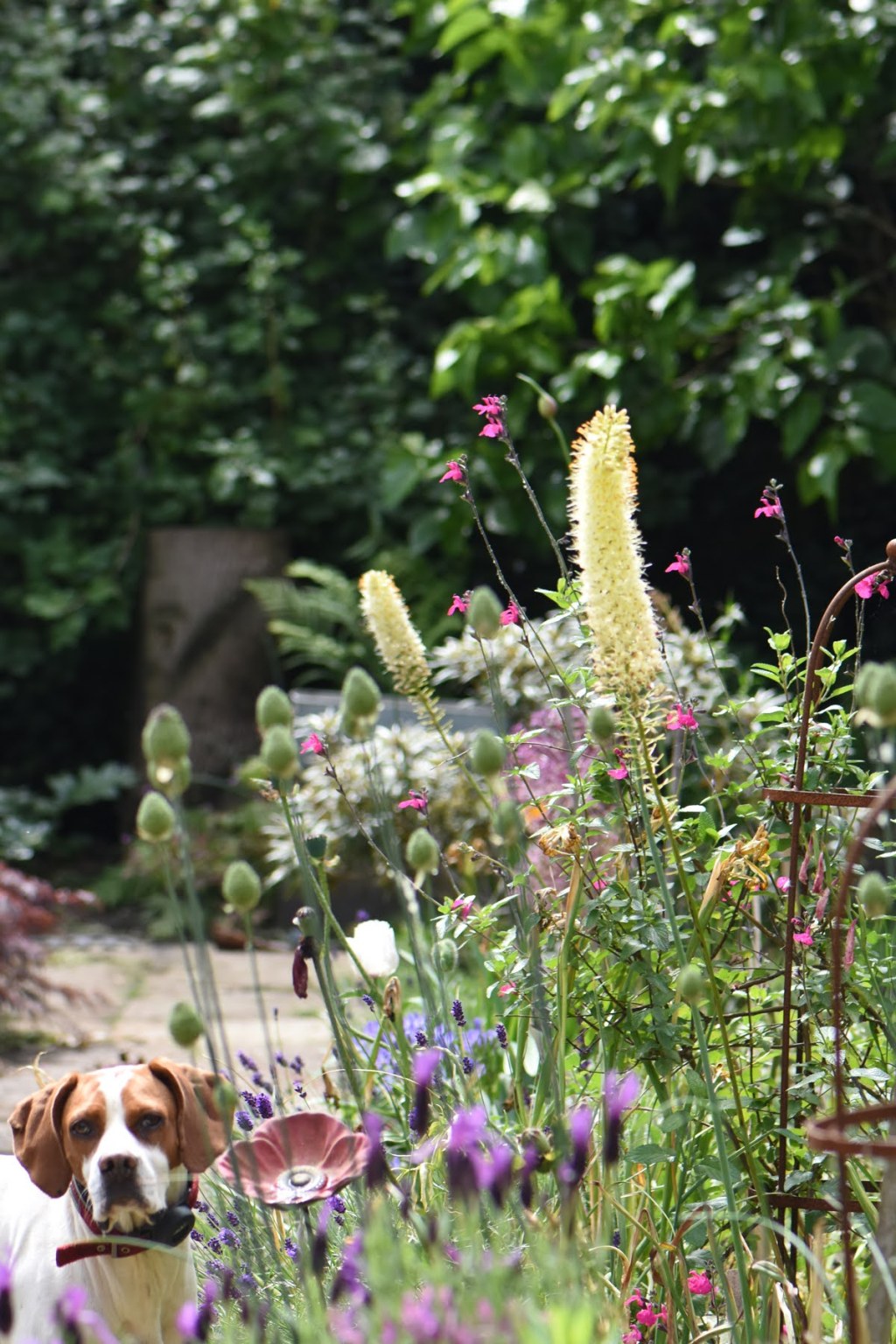
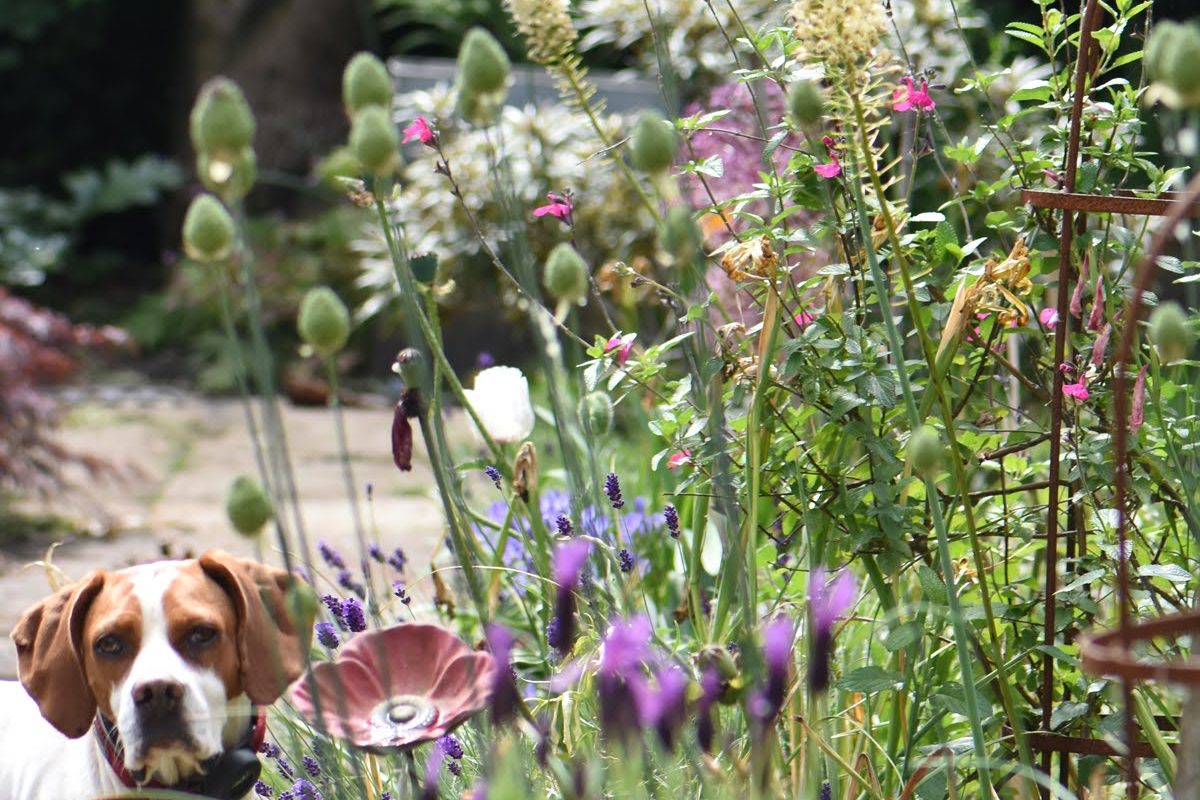
But it is also my job to produce flowers to photograph. I end up planting hundreds of bulbs in autumn and spring. The result is that my garden is full of flowers and looks bloody amazing.
It’s October and just this week I have been thinking about ground elder a lot. I’m thinking I should try to lift it out when I plant my bulbs. But I still have dahlias in flower, and I don’t want to lose them too early.
It dawned on me that my preoccupation with this thought, along with the addition of mud under my nails, stinging nettle stings, muddy knees, and scrapes on my arm from moving a large log, means I probably am a gardener.

 Stephen Teeuw